As consumer demand and international import regulations (EU Corporate Sustainability Due Diligence Directive, US SEC Climate Disclosures) rapidly evolve, WIDEWAY GROUP has spearheaded the transition toward circular shoemaking. Located in ChenDai town, Jinjiang—China's Footwear Capital—our dedicated Eco Materials Laboratory works closely with regional polymer recycling leaders and bio-chemical institutes.
We provide end-to-end sustainable supply chain traceability, issuing official GRS Transaction Certificates (TC) and verified Life Cycle Assessments (LCA) for every order. From high-performance athletic sneakers to everyday lifestyle trainers and slides, we prove that eco-conscious footwear can deliver superior comfort, tensile durability, and trendsetting aesthetics without ethical compromise.
Every component engineered from traceable, certified sustainable feedstocks designed to minimize environmental depletion.
Spun from post-consumer recycled PET plastic bottles recovered from coastlines and municipal sorting centers. Each pair of shoes diverts approximately 6–8 plastic bottles from marine ecosystems.
Renewable sugarcane ethanol synthesized into high-resilience EVA granules. Captures CO2 during crop growth, replacing up to 40% petrochemical content with identical rebound cushioning.
Harvested from eutrophic freshwater waterways prone to toxic algae overgrowth. Cleaning freshwater systems while producing flexible, odor-resistant, shock-absorbing outsoles and recovery footbeds.
Water-based polyurethane adhesives and vegan microfiber leathers engineered without DMF, benzene, or toluene. Delivers zero chemical smell in shoe boxes and clean indoor factory air.
Up to 30% post-industrial rubber trim waste and end-of-life footwear soles reground into high-traction rubber pods, eliminating landfill disposal while maintaining DIN abrasion resistance ≤ 130mm³.
100% recycled unbleached kraft paper shoe boxes printed with non-toxic vegetable soy inks. Shipped with biodegradable cassava starch polybags or organic cotton drawstring bags.
Empirical environmental benchmark comparing conventional footwear manufacturing against WIDEWAY's Eco-Engineered Protocol.
| Component / Stage | Conventional Sneaker | WIDEWAY Eco-Engineered Protocol | Net Environmental Benefit |
|---|---|---|---|
| Upper Textile Sourcing | Virgin petroleum-based polyester mesh | 100% GRS Post-Consumer Recycled RPET Yarn | -45% Water consumption, -55% CO2e energy |
| Midsole Cushioning | 100% Fossil fuel virgin EVA polymer | 30–40% Bio-based Sugarcane EVA / Algae Bloom Foam | -38% Petrochemical footprint, carbon neutral feedstock |
| Sole Bonding Adhesive | Organic solvent-based glues (Toluene / VOCs) | Automated Waterborne Polyurethane Adhesive | Zero atmospheric VOC emission, zero chemical odor |
| Outsole Molding Waste | Rubber flashing sent to municipal landfill | Cryogenic regrinding into 20–30% recycled rubber pods | Zero solid manufacturing waste to landfill |
| Retail Shoe Packaging | Bleached white virgin cardboard + PE bag | FSC-certified unbleached kraft box + soy ink print | 100% Biodegradable & curbside recyclable |

Global Recycled Standard audited chain of custody.

Tested for 300+ harmful chemical substances.
Responsibly managed forest wood-pulp packaging.

Zero SVHC restricted substances under Annex XVII.
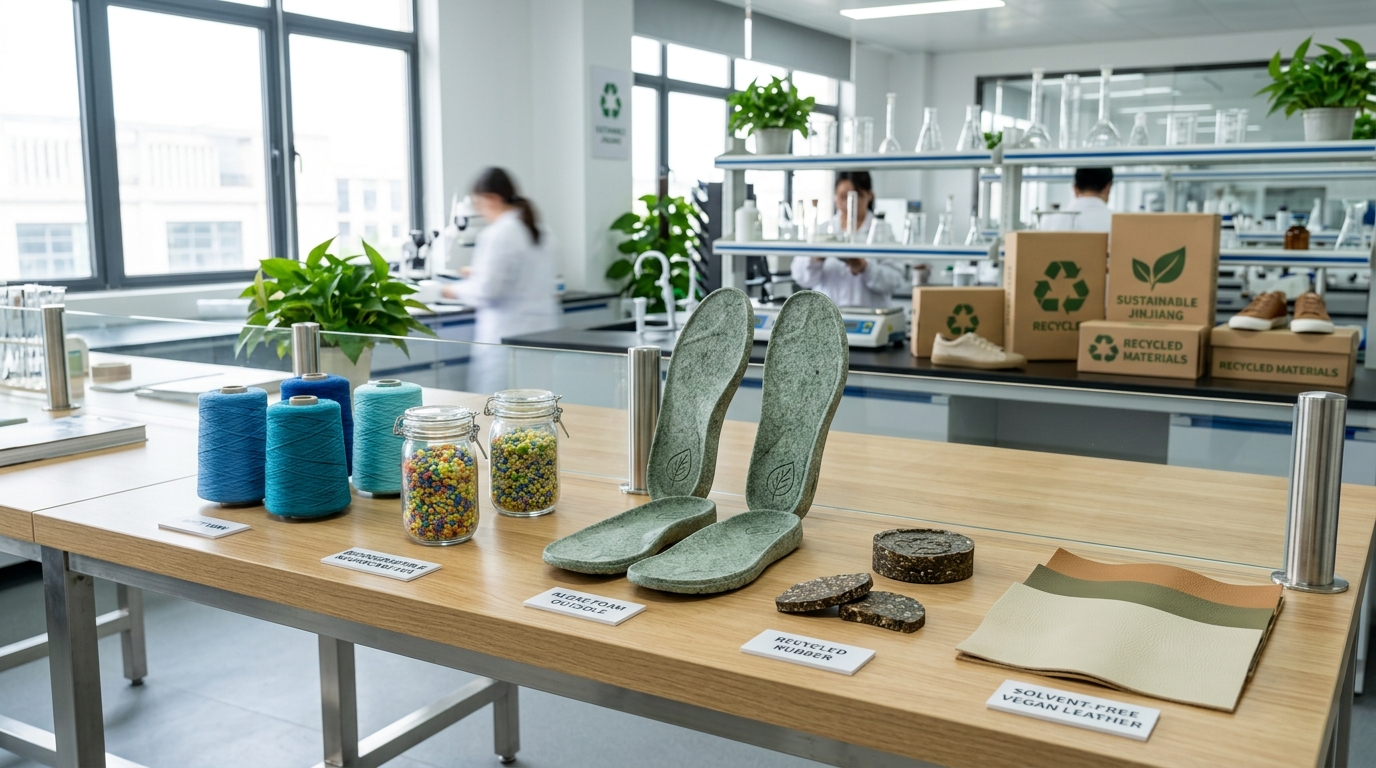
Receive physical swatches of GRS recycled RPET flyknit meshes, sugarcane bio-EVA sole pucks, algae foam outsoles, and waterborne vegan leathers for your design team.

 +86 185 0595 9266